60 Years of Hospitality: The Story of Hótel Höfn
Since 1966, Hótel Höfn has been a gathering place for locals and travelers at the foot of Vatnajökull. Here's our story, and where we're heading next.

In 1966, Hótel Höfn opened its doors in a growing fishing village beneath Vatnajökull. Six decades later, it remains a gathering place for locals, a stop for travellers, and part of Höfn's story.

Faith in the future
When Hótel Höfn was built, Höfn in Hornafjörður was growing rapidly. The settlement traces its beginnings to 1897, when merchant Ottó Tulinius moved his business from Papós to the estuary.
Around the middle of the last century, only about 300 people lived there. But when the bridge over Hornafjarðarfljót opened in 1961, the journey became much shorter and the village began to flourish. The fishing industry grew, the population increased, and optimism was in the air.
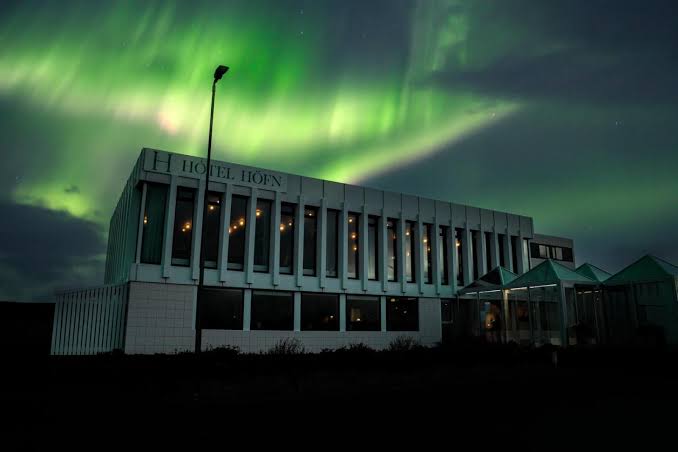
At that time, two sisters and their husbands took on the formidable task of building a hotel. The building reflected the spirit of its era, with clean lines, tall windows and a white façade, and it looked confidently toward the future. In the old photographs, it stands alone and proud on the plain, with the mountains of Hornafjörður behind it.
For a small community on the southeast coast, a new hotel meant more than concrete and glass. It was a statement of faith in the future: a place built to welcome visitors, and to welcome them well.

The heart of the community
From the very beginning, Hótel Höfn was more than a place to stay. People from Hornafjörður came there to celebrate, meet and enjoy one another's company. Feasts, meetings and all kinds of celebrations, great moments in the lives of people and the community, took place under the same roof. The hotel became a fixed point in daily life, where a traveller from the south and a fisherman from the harbour could sit at the same table.

Meetings under one roof
In 1969, only three years after the hotel opened, Samvinnutryggingar held its annual meeting at Hótel Höfn. Samvinnutryggingar had been founded in 1946 at the initiative of the Federation of Icelandic Cooperative Societies and the country's cooperative associations. A banner bearing the logo of Andvaka, the life insurance company that operated alongside it, hung on the wall.
The hall was packed with formally dressed attendees. Among those who spoke was Gísli Björnsson, head of the local electricity utility. A photograph of him at the lectern has been preserved.
The photographs from the meeting clearly show the role the hotel had already taken on in local life. People came not only to stay, but also to meet, discuss matters and make decisions together.

Hótel Höfn today
The hotel was renovated in 2019, with great care taken to keep the 1960s character that has defined the building from day one. Today, Hótel Höfn offers 68 rooms, a restaurant and a bar, and a hall on the second floor that seats up to 120 guests for meetings, conferences and celebrations. The tradition you see in the old photographs is still alive, and this is still where people come together.
Hótel Höfn is now part of HITTA, a hotel group within KNOX, together with its sister hotel Flóki in the Westfjords.

The next sixty years
The story goes that fishermen used to stay at the hotel, and that it had the only record player in town, which made it the heart of the community. That's the spirit we want to bring back.
HITTA comes from the Icelandic word for "to meet", and that's the core of our vision: a lively meeting place where locals and travelers share the same table. Here's what that looks like:
A combined reception and bar, where you get a drink while you check in
The record player back in its rightful place, with live music, quiz nights, knitting evenings and card games on the calendar
Stories of local fishermen told throughout the hotel
Bike rides, hikes and glacier tours that start right at the door
We're proud of this milestone and grateful to everyone who has walked through our doors over the past sixty years: guests, locals and staff. Thank you for being part of the journey. Here's to the next sixty.